To tell the time in Mandarin Chinese, say the hour + 点 (diǎn), then the minutes + 分 (fēn). 三点二十分 (sān diǎn èrshí fēn) is 3:20. To ask the time, say 现在几点? (Xiànzài jǐ diǎn?), "What time is it now?"
A clock reading and an amount of time need different words. This guide gets you from asking the hour to confirming a meeting, without accidentally saying "two hours" when you mean "two o'clock".
Ask the time, then answer it
For a polite opening, add 请问 (qǐngwèn), "excuse me":
- 请问,现在几点? (Qǐngwèn, xiànzài jǐ diǎn?) Excuse me, what time is it now?
- 现在三点。 (Xiànzài sān diǎn.) It is three o'clock now.
You do not need 是 (shì), "to be", between 现在 (xiànzài), "now", and the time. Oxford's Grammar database, section "Telling the time (20)", explains this pattern. You may also hear 现在几点了? (Xiànzài jǐ diǎn le?); the final 了 (le) is normal here, not a past-tense ending.
For a time attached to an activity, replace "now" with that activity: 你几点吃饭? (Nǐ jǐ diǎn chīfàn?) "What time do you eat?" You are asking for a clock time, not the length of the meal. Our food-ordering guide handles the restaurant conversation itself.
Read the hour before the minutes
Here are four clock readings to say aloud. The examples are deliberately close together: listen for the change after 点.
| Clock | Say | Pinyin |
|---|---|---|
| 2:00 | 两点 | liǎng diǎn |
| 2:05 | 两点零五分 | liǎng diǎn líng wǔ fēn |
| 2:10 | 两点十分 | liǎng diǎn shí fēn |
| 2:22 | 两点二十二分 | liǎng diǎn èrshí'èr fēn |
Use 两 (liǎng) for the hour two in this beginner pattern. But the 22 minutes in the last row use 二十二 (èrshí'èr), not 两十二. Do not replace every 二 with 两 just because a sentence tells the time.
For minutes 01–09, including 零 (líng), "zero", gives you a clear form to practise: 两点零五分. Oxford's Chinese Multimedia Grammar Index, "Telling the time", uses this five-past-two form.
Half past is not half an hour from now
半 (bàn) means half. After the hour, it gives you half past: 六点半 (liù diǎn bàn) is 6:30, the same clock time as 六点三十分 (liù diǎn sānshí fēn).
刻 (kè) is a quarter of an hour. For 6:15, you can say 六点一刻 (liù diǎn yí kè) or 六点十五分 (liù diǎn shíwǔ fēn). For 6:45, 六点四十五分 (liù diǎn sìshíwǔ fēn) is a straightforward choice; 六点三刻 (liù diǎn sān kè) expresses the same time.
The pinyin here keeps dictionary tone marks except that 一 before 刻 shows its spoken second tone: 一刻 (yí kè). That reading also appears in Oxford's quarter-hour examples.
- líng零HSK1
zero; nought
- Example零钱líng qiánchange (of money); small change
You may hear a countdown to the next hour, too: 差一刻九点 (chà yí kè jiǔ diǎn) means 8:45, a quarter to nine. 差 (chà) means "short of" here. WillyChina's "How to Tell the Time in Mandarin" explains this quarter-to pattern. If the subtraction slows you down, say 八点四十五分 (bā diǎn sìshíwǔ fēn).
Put morning or evening before the time
Do not leave an appointment at "eight" if the other person could mean morning or evening. Put the day part first:
- 上午八点 (shàngwǔ bā diǎn): eight in the morning.
- 中午十二点 (zhōngwǔ shí'èr diǎn): twelve noon.
- 下午两点半 (xiàwǔ liǎng diǎn bàn): half past two in the afternoon.
- 晚上八点 (wǎnshang bā diǎn): eight in the evening.
Mango Languages' lesson "How to tell time using the clock in Mandarin Chinese?" explains this order and the day-part vocabulary. In a sentence, put the time before the action:
我们下午两点半见。 (Wǒmen xiàwǔ liǎng diǎn bàn jiàn.) Let's meet at 2:30 in the afternoon.
There is no separate word for English "at" in this sentence. 见 (jiàn) is "meet" here.
Our hotel check-in guide asks 几点退房? (Jǐ diǎn tuìfáng?), "What time is check-out?" These patterns let you understand the answer, not just ask the question.
Two o'clock or two hours?
Compare the clock with a duration:
- 两点 (liǎng diǎn): two o'clock.
- 两个小时 (liǎng gè xiǎoshí): two hours.
- 两点半 (liǎng diǎn bàn): half past two.
- 半个小时 (bàn gè xiǎoshí): half an hour.
- 二十分钟 (èrshí fēnzhōng): twenty minutes.
小时 (xiǎoshí) means an hour; 分钟 (fēnzhōng) means a minute. HSK Academy's examples show these units used for elapsed time and waiting. Neither 半个小时 nor 二十分钟, by itself, tells someone when to arrive.
Repair a meeting-time mix-up
Cover the answers and try each response aloud.
- Your phone shows 2:05. Say the time, including the zero.
- Someone says 六点半 (liù diǎn bàn). What clock time is that?
- You agreed to meet at 8:00 p.m. Your friend checks 上午八点? (Shàngwǔ bā diǎn?), "Eight in the morning?" Repeat the correct day part and hour.
- Say "two hours", not "two o'clock".
Suggested answers:
- 两点零五分。 (Liǎng diǎn líng wǔ fēn.) 2:05.
- 6:30.
- 晚上八点。 (Wǎnshang bā diǎn.) Eight in the evening.
- 两个小时。 (Liǎng gè xiǎoshí.) Two hours.
Now check the vocabulary without the clock clues.
点Tap to reveal
diǎno'clock; dot
半Tap to reveal
bànhalf; semi-
刻Tap to reveal
kèquarter (hour); moment
零Tap to reveal
língzero; nought
上午Tap to reveal
shàng wǔmorning (before noon)
下午Tap to reveal
xià wǔafternoon
小时Tap to reveal
xiǎo shíhour
分钟Tap to reveal
fēn zhōngminute
Got it: 0 of 8
When a time word such as 下午 appears on Lock In's Lock Screen widget, use it as a prompt to say a meeting time aloud. Then change only the minutes. This is a speaking exercise you do yourself; the widget does not grade your sentence or set an appointment.
Further reading
- Oxford University, Grammar database: "Telling the time (20)", for asking and answering without 是.
- Oxford University, Chinese Multimedia Grammar Index: "Telling the time", for the zero in 2:05.
- Lina Shen, Mango Languages, "How to tell time using the clock in Mandarin Chinese?": "When to use the word 分", "How to distinguish a.m. and p.m." and "No prepositions when telling time".
- WillyChina, "How to Tell the Time in Mandarin": "Six words unlock the clock" and "Questions", for quarter-hour and duration forms.
- HSK Academy: 小时 and 分钟, for duration vocabulary.
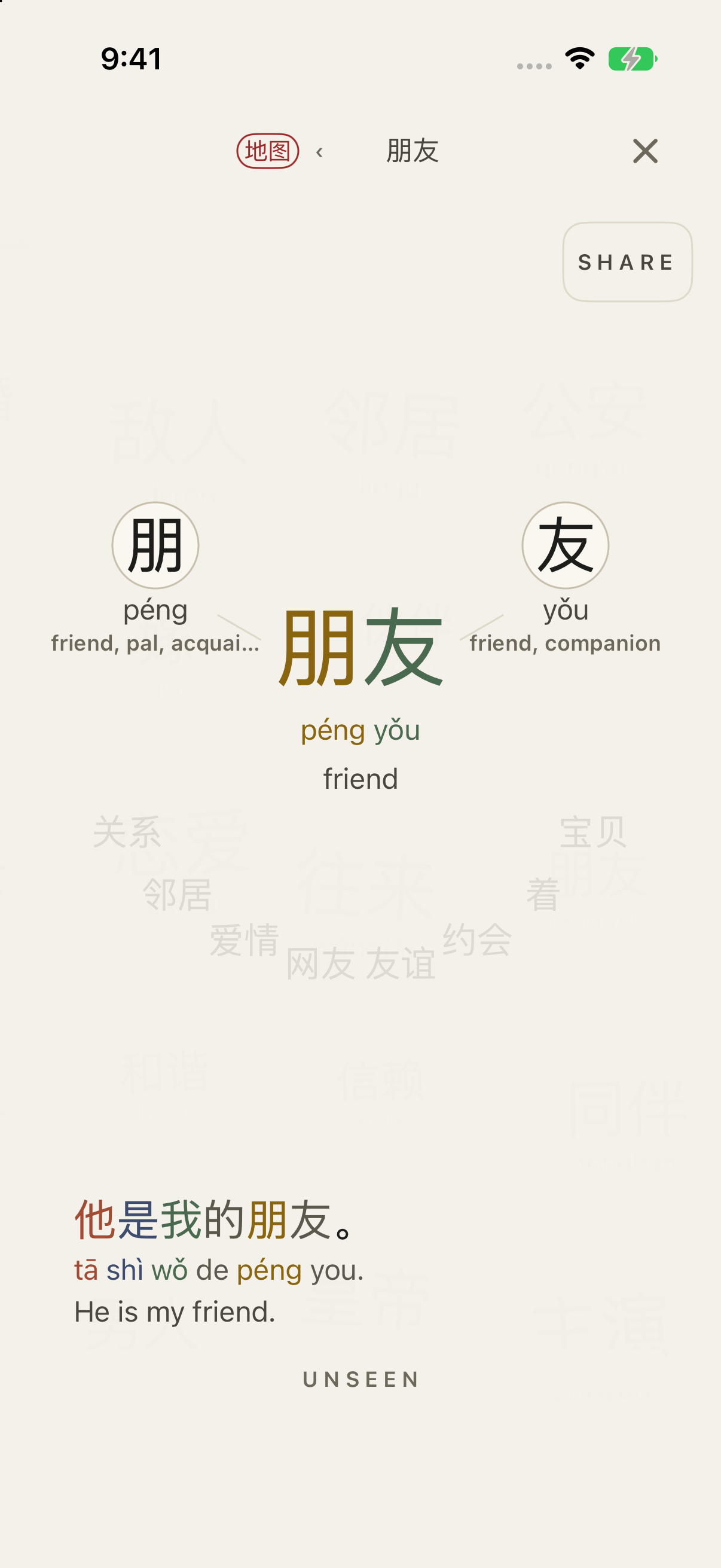
Every word opens like this in Lock In
Characters, readings and a real sentence, on your lock screen.

Word data: CC-CEDICT, CC BY-SA 4.0, adapted.