Please in Mandarin Chinese is often 请 (qǐng). Put it before the action: 请坐 (qǐng zuò) means "please sit down". But if you want to ask whether you may sit, you need a different sentence. The chair has not changed. The person you want to sit has.
Start with the job your sentence needs to do:
| Your purpose | A useful starting point | Meaning |
|---|---|---|
| Invite or ask someone to do something | 请 (qǐng) + action | Please do… |
| Politely introduce a question | 请问 (qǐngwèn) + question | Excuse me, may I ask…? |
| Ask someone to take some trouble for you | 麻烦你 (máfan nǐ) + action | Could I trouble you to…? |
| Ask permission for yourself | 我可以…吗? (wǒ kěyǐ…ma?) | May I…? |
These are useful choices, not four separate levels of politeness. You do not need to put all of them into one request.
请 goes before the action
请 has the dictionary reading qǐng, with a third tone. It can mean to ask or invite, which is why its word card is broader than the English word "please".
Try these short invitations:
- 请坐。 (Qǐng zuò.) Please sit down.
- 请进。 (Qǐng jìn.) Please come in.
- 请喝茶。 (Qǐng hē chá.) Please have some tea.
In these sentences, 请 comes before the verb. Do not move it to the end just because English allows "Sit down, please."
It also appears in requests rather than invitations: 请等一下。 (Qǐng děng yíxià.) "Please wait a moment." Here 一下 (yíxià) makes the wait sound brief.
请问 opens a question, not an instruction
问 (wèn) means "to ask". 请问 (qǐngwèn) introduces a question politely, rather like "Excuse me, may I ask…?"
请问,厕所在哪里? (Qǐngwèn, cèsuǒ zài nǎlǐ?) means "Excuse me, where is the toilet?"
The part after 请问 is already a question: 厕所在哪里? You are asking for information, not asking the listener to perform the action "toilet".
Compare this with 请进 (qǐng jìn). There you are inviting someone inside, not asking them where something is. Swapping 请问 into that invitation does not make it more polite; it changes the structure you need.
麻烦 acknowledges a favor
麻烦 (máfan) means trouble or to bother someone. In 麻烦你… (máfan nǐ…), you acknowledge the effort your request asks of the other person.
Imagine handing someone a form you cannot read:
麻烦您帮我看一下。 (Máfan nín bāng wǒ kàn yíxià.) Could you take a look for me, please?
帮我 (bāng wǒ) means "help me", and 看一下 (kàn yíxià) is "take a look". 您 (nín) is the respectful form of "you". With a friend, you could use 你 (nǐ) instead. A sentence with 你 is not automatically impolite.
This is not a rule that 请 is wrong whenever you need help. It gives you another way to frame the favor, rather than translating each English "please" with the same character.
One chair, two different requests
You are showing a guest to a seat:
请坐。 (Qǐng zuò.) Please sit down.
You are the guest and want permission to sit here:
我可以坐这里吗? (Wǒ kěyǐ zuò zhèlǐ ma?) May I sit here?
In the second sentence, 我 (wǒ) tells us who wants to sit, 可以 (kěyǐ) asks about permission, and 吗 (ma) marks a yes-or-no question. There is no 请, but it is still a request you can make politely.
Fix the request, not just the translation
Decide whether each sentence needs changing, and why. Try your version before checking the answers.
- A guest wants to sit here but says 请坐。 (Qǐng zuò.) Who would that invite to sit?
- A host wants to invite a visitor inside but starts with 请问… (Qǐngwèn…). Does the host actually have a question?
- Someone asks 厕所在哪里? (Cèsuǒ zài nǎlǐ?) and wants a polite opening. Should they ask the other person to do something, or introduce a question?
Repairs:
- 我可以坐这里吗? (Wǒ kěyǐ zuò zhèlǐ ma?) "May I sit here?" The speaker wants permission for their own action; 请坐 invites the listener instead.
- 请进。 (Qǐng jìn.) "Please come in." Keep 请 before the action and drop 问, because this is an invitation.
- 请问,厕所在哪里? (Qǐngwèn, cèsuǒ zài nǎlǐ?) "Excuse me, where is the toilet?" The original question stays intact after the polite opening.
Now check the building blocks separately. Try saying the reading and meaning before flipping each card.
请Tap to reveal
qǐngto ask; to invite
请问Tap to reveal
qǐngwènExcuse me, may I ask...?
麻烦Tap to reveal
má fantrouble; to bother
您Tap to reveal
nínyou (polite)
可以Tap to reveal
kě yǐcan; may
坐Tap to reveal
zuòto sit
Got it: 0 of 6
A word on Lock In's lock-screen widget can be a cue for this extra step: when you encounter a request word, look away and make a whole sentence with it. The widget gives you vocabulary practice, not feedback on whether a request suits every social situation. Practise the sentences with a teacher or conversation partner too.
For more words to put around these requests, use our HSK 1 words grouped for daily use. Our HSK 1 in your pocket guide gives you a small review routine to start with.
Further reading
- HSK Academy: 请 and its meanings, including asking, inviting and "please do".
- HSK Academy: 麻烦, with an example of requesting help respectfully.
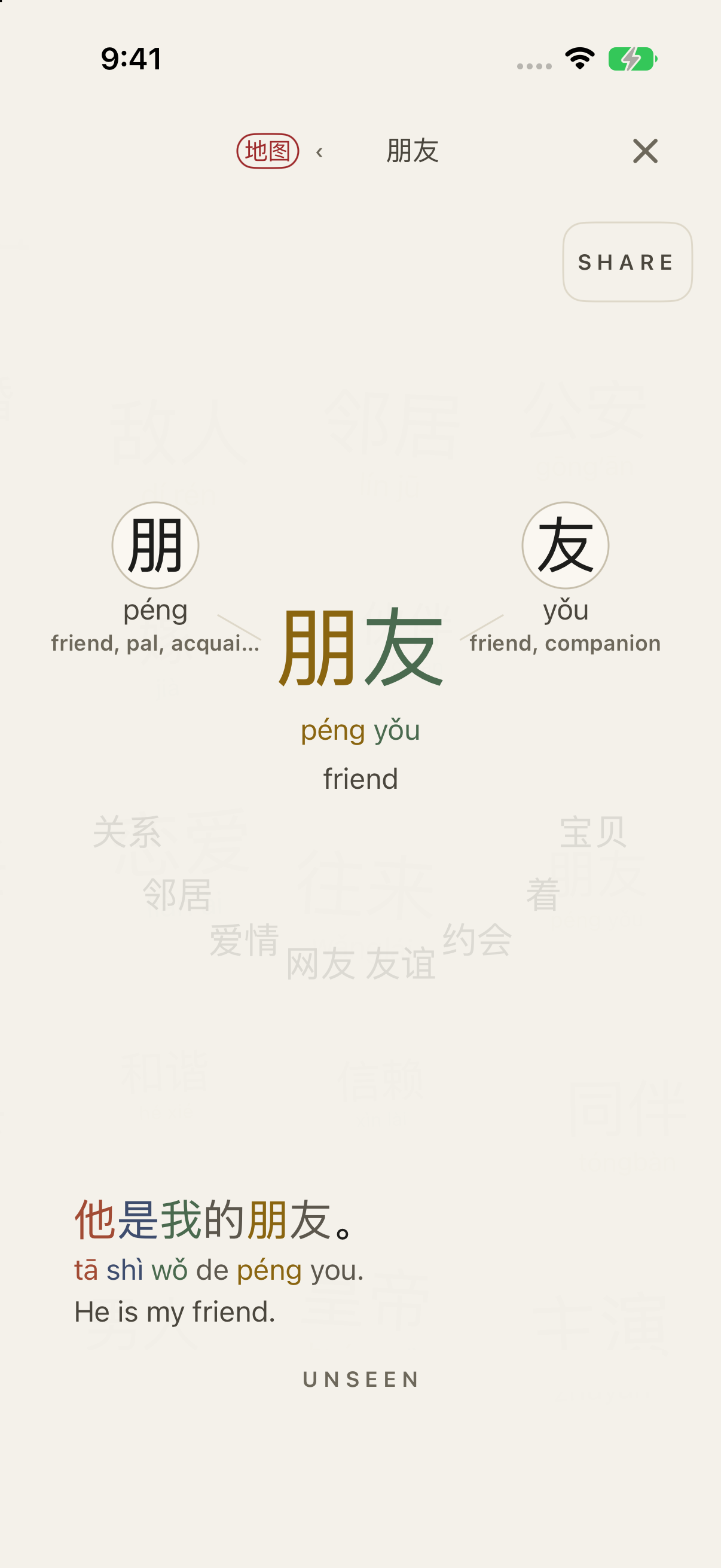
Every word opens like this in Lock In
Characters, readings and a real sentence, on your lock screen.

Word data: CC-CEDICT, CC BY-SA 4.0, adapted.