To say "Chinese" in Chinese when you mean the language, start with 中文 (zhōngwén). 汉语 (Hànyǔ) also means the Chinese language. To specify standard Mandarin, use 普通话 (pǔtōnghuà). If you mean a Chinese person, you need 中国人 (Zhōngguórén), not a language name.
English uses one word for several jobs. Chinese makes you choose which job you mean.
Choose the thing you mean first
| You mean… | Say… | Pinyin | Keep in mind |
|---|---|---|---|
| The Chinese language | 中文 | zhōngwén | A useful general choice |
| The Chinese language | 汉语 | Hànyǔ | Another language name you will meet in study materials |
| Standard Mandarin | 普通话 | pǔtōnghuà | More specific than "Chinese" |
| China, the country | 中国 | Zhōngguó | A place, not a language |
| A Chinese person | 中国人 | Zhōngguórén | 人 means person |
| Chinese characters | 汉字 | Hànzì | The written characters, not a name for a speaker |
Compare the words before putting them in a sentence.
- pǔ普tōng通huà话HSK4
Mandarin Chinese
- Example打电话dǎ diàn huàto make a telephone call
The readings above are Mandarin. They are not Cantonese pronunciations of the same characters.
中文 is not only for writing
The 文 (wén) in 中文 can refer to writing, but do not turn that clue into a rule that 中文 is only written Chinese. You can say 说中文 (shuō zhōngwén), "speak Chinese". Olle Linge's classroom expressions guide uses 中文 in spoken requests too.
For a simple introduction to your studies:
我学中文。 (Wǒ xué zhōngwén.) I study Chinese.
You can also say 我学汉语。 (Wǒ xué Hànyǔ.) I study Chinese. 汉语 is not a different language you must learn after 中文. Both can name what you are studying; the surrounding conversation tells the listener more.
The spelling of 中文 is the same in simplified and traditional Chinese. 汉语 becomes 漢語 in traditional writing; its Mandarin reading remains Hànyǔ. See HSK Academy's entries for 中文 and 汉语.
普通话 makes Mandarin explicit
"Chinese" can be broader than Mandarin. If you need to distinguish standard Mandarin from another variety of Chinese, say 普通话 (pǔtōnghuà) rather than expecting 中文 to make that distinction for you.
你会说普通话吗? (Nǐ huì shuō pǔtōnghuà ma?) Can you speak Mandarin?
The parts are useful: 你 (nǐ) is "you", 会 (huì) expresses a learned ability here, 说 (shuō) is "speak", and 吗 (ma) makes this a yes-or-no question.
You will also encounter regional names:
- 国语 / 國語 (Guóyǔ): a common name for Mandarin in Taiwan.
- 华语 / 華語 (Huáyǔ): commonly used for Mandarin in Singapore and Malaysia.
These are names to recognise, not a requirement to memorise every label before speaking. Regional forms of standard Mandarin have differences in pronunciation and vocabulary; the names do not promise identical speech everywhere. The naming section of Standard Chinese explains the regional usage. HSK Academy gives the reading and traditional spelling 普通話.
A language is not a nationality
Compare these two statements:
- 我会说中文。 (Wǒ huì shuō zhōngwén.) I can speak Chinese.
- 我是中国人。 (Wǒ shì Zhōngguórén.) I am Chinese.
The first describes a language skill. The second describes the speaker as a Chinese person. One does not imply the other.
中国 (Zhōngguó) is China. Add 人 (rén), person, to get 中国人 (Zhōngguórén). If you say 我是中文 (wǒ shì zhōngwén), you have called yourself the Chinese language. Choose the verb as well as the noun: use 会说 (huì shuō) for the skill, or 是 (shì) for the identity in these examples.
Try the choice before the cards
Complete each sentence. More than one language name may work where the question does not specify Mandarin.
- Tell a classmate you study Chinese: 我学___。 (Wǒ xué ___.)
- Ask specifically about standard Mandarin: 你会说___吗? (Nǐ huì shuō ___ ma?)
- A Chinese person introduces themselves: 我是___。 (Wǒ shì ___.)
- Label the country on a map: ___.
Answers:
- 中文 (zhōngwén) or 汉语 (Hànyǔ). Both name the language here.
- 普通话 (pǔtōnghuà). This makes the Mandarin meaning explicit.
- 中国人 (Zhōngguórén). The sentence is about a person, not their language skills.
- 中国 (Zhōngguó). Leave off 人 when you mean the country.
Now recall the readings and meanings without the sentence clues.
中文Tap to reveal
zhōng wénChinese language
汉语Tap to reveal
Hàn yǔChinese language
普通话Tap to reveal
pǔtōnghuàMandarin Chinese
中国Tap to reveal
Zhōng guóChina
人Tap to reveal
rénperson; people
汉字Tap to reveal
HànzìChinese character(s)
Got it: 0 of 6
When a word appears on Lock In's Lock Screen widget, use it as a prompt: is it a language, a person or a place? Look away and make a sentence before checking the word again. That is an extra speaking exercise you can do yourself, not a promise that the widget checks your grammar.
For more words to build around these names, try our HSK 1 words grouped for daily use. To turn a question into a polite request, read please in Chinese.
Further reading
- Olle Linge, Hacking Chinese: Classroom Mandarin, for expressions you can use while learning.
- HSK Academy: 中国, for the country name, its traditional spelling and examples with 中国人.
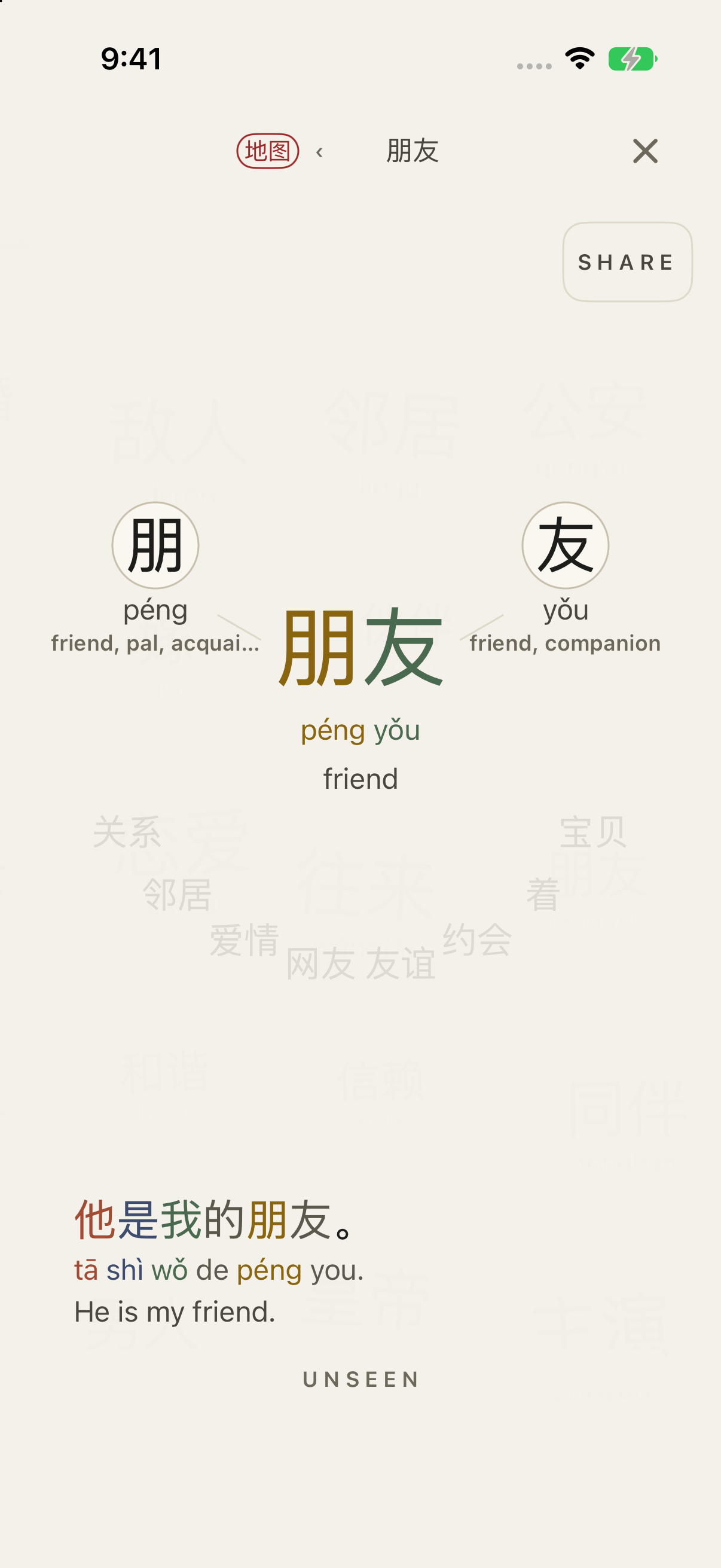
Every word opens like this in Lock In
Characters, readings and a real sentence, on your lock screen.

Word data: CC-CEDICT, CC BY-SA 4.0, adapted.